

Why AI and Cloud Infrastructure Must Go Green

The Silent Cost of the Digital Revolution
Artificial Intelligence is transforming every sector — from healthcare diagnostics to financial modelling, autonomous vehicles, climate forecasting, entertainment, and beyond. Cloud computing is now the backbone of global business, enabling instant scalability and 24/7 workflow continuity.
But behind every chatbot, deep-learning model, and cloud-hosted application lies a massive appetite for energy — an appetite that the world’s current power infrastructure is struggling to support sustainably.
As demand for AI and cloud infrastructure grows at an exponential rate, so does the urgency to rethink how this digital ecosystem is powered. The future of innovation cannot rely on outdated, carbon-intensive energy models. The choice is simple: AI must go green, or it may become one of the world’s largest climate burdens.
The Explosive Growth of Compute Demand
AI training and inference are energy-hungry activities
Large-scale AI models require enormous computational power. Training a single modern deep-learning model can use as much electricity as several hundred households consume in a year. And this is just training — inference (running the model) occurs billions of times once deployed.
As companies expand use of AI across finance, cloud services, retail, engineering, logistics, and national infrastructure, compute needs are skyrocketing.
Data centres are growing — faster than ever before
Global data centre electricity consumption is projected to double within the next few years.
AI-ready data centres consume 5–10× more power than traditional facilities.
Hyper-scale cloud providers (AWS, Azure, Google) are building new facilities worldwide — but even they are hitting grid limitations.
This growth has created an urgent challenge: how to power the intelligence of tomorrow without overwhelming the energy systems of today.
The Problem: Traditional Power Can’t Keep Up

1. Carbon-intensive grids
Most global electricity grids still rely heavily on fossil fuels. As AI and cloud services expand, so does the carbon footprint attached to every computation performed.Most global electricity grids still rely heavily on fossil fuels. As AI and cloud services expand, so does the carbon footprint attached to every computation performed.
If nothing changes, AI could become one of the largest contributors to global emissions — completely counteracting global climate goals.
2. Grid congestion & energy scarcity
In many regions, power grids are already overstretched. New data centres are being delayed or cancelled simply because there isn’t enough available power capacity. In many regions, power grids are already overstretched. New data centres are being delayed or cancelled simply because there isn’t enough available power capacity.
This creates a bottleneck that restricts innovation and raises operational risk.
3. Rising energy costs
Energy prices are volatile. For AI-heavy organisations, power is now one of the largest operational expenses — often exceeding hardware costs. Energy prices are volatile. For AI-heavy organisations, power is now one of the largest operational expenses — often exceeding hardware costs.Energy prices are volatile. For AI-heavy organisations, power is now one of the largest operational expenses — often exceeding hardware costs.
Reliance on conventional grid electricity means constantly rising bills and unpredictable long-term economics.
The Solution: Clean-Energy Infrastructure for AI & Cloud
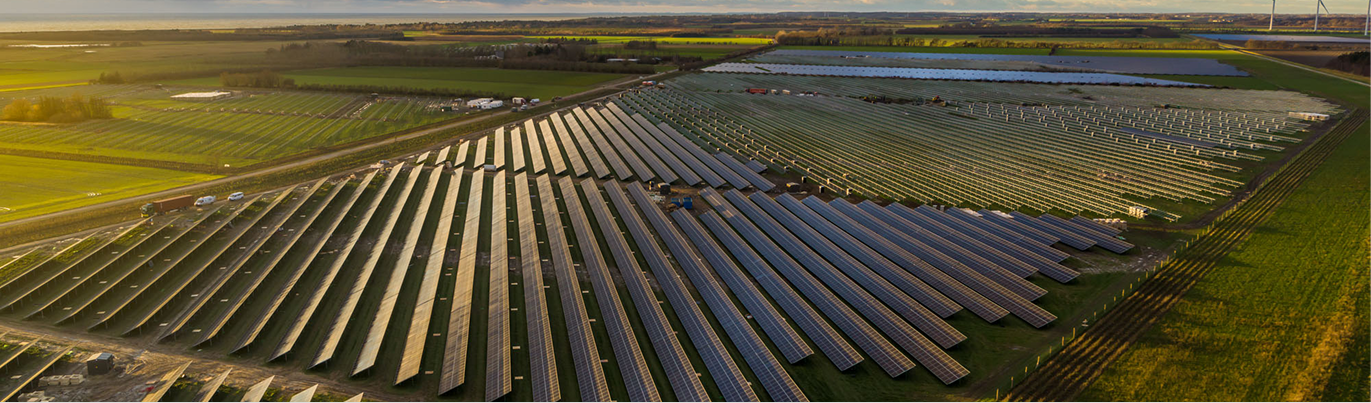
1. Renewable-powered data centres reduce emissions dramatically
Clean energy sources — such as wind, solar, hydro, geothermal, and grid-independent clean-power systems — allow companies to expand AI and cloud workloads without increasing carbon output.
Leading cloud and AI companies are already making large renewable energy commitments because:
They lower emissions
They stabilise long-term costs
They appeal to ESG-driven investors
They align with emerging regulatory standards
2. Dedicated clean-power infrastructure eliminates grid dependency
Forward-thinking companies are partnering with infrastructure providers who develop:
Off-grid clean-energy systems
Private energy infrastructure for AI/HPC
High-density data-center campuses powered entirely by renewables
Clean Energy-as-a-Service (CEaaS) models
This ensures reliable power supply without competing with local communities or overloading existing national grids.
3. Rising energy costs
When clean-energy systems are built at scale, they often provide significantly lower operating costs than traditional grid energy.
Some organisations are already saving:
• 30%–75% on long-term energy expenditure
• Millions in avoided carbon taxes and regulatory penalties
• Additional financial benefits from sustainability incentives
Conclusion: The Future of AI Depends on Clean Energy
We stand at a turning point. AI is evolving rapidly — but without sustainable power, global expansion will slow, costs will rise, and climate impact will intensify.
Clean-energy infrastructure isn’t optional anymore. It’s essential to:
Power global AI adoption
Ensure long-term compute affordability
Reduce carbon impact
Unlock next-generation cloud innovation
Secure energy resilience in a volatile world
Companies that embrace green infrastructure now will lead the next wave of the AI revolution. The ones that ignore it risk falling behind — technologically, financially, and ethically.
Talk to an expert today
Connect with our team to explore tailored solutions for your AI, cloud, or enterprise workloads.

